 Use of modern technology and devices in the legal process have become so important that the American Bar Association, in late 2012, added a resolution to its professional conduct code that encourages lawyers to keep abreast of “the benefits and risks associated with relevant technology” to ensure clients of competent representation. In fact, U.S. Magistrate Judge James C. Francis recently said at a technology and law conference that lawyers who did not become familiar with technology were "engaging in a slow career suicide" the ABA Journal recently reported. Law librarians should take this change to heart.
Professionals of all types make decisions everyday based on the ethical standards of their communities and professions. Many ethical codes are based on custom rather than the written word, but many professions have codes of ethics that are clearly expressed. Some professions, such as the legal field, have codes of ethics, breach of which comes with some form of professional punishment. Dual degree law librarians, that is those who have both a Masters in Information Science and a Juris Doctor, must live by both types of codes. Both the American Library Association and the American Association of Law Libraries have codes of ethics which are meant to be inspirational, to promote the good of librarianship. Lawyers are governed by the American Bar Association, and their state bar association, codes of ethics, which are regulatory in nature, in that they are meant to control specific behavior and protect the reputation of the practice of law and those seeking legal help from those attorneys who would use their position of relative power to do harm. Though law librarians who are not members of their states Bar, they may want to be in the future and thus, from the time they enter law school, anyone wanting to practice law must adhere to these ethical codes.
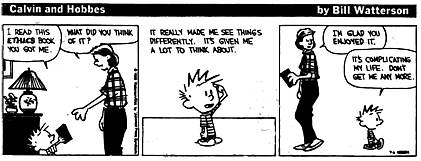 For law librarians, this ethical obligation can complicate they way they must operate and think about the future. If lawyers are going to be obligated to use current technology - if one takes the 2012 change as only a first step to addressing use of technology - then those involved in their education will have to adapt, and this means law librarians. Law librarians will have to become tech-savvy themselves so that they can assist future law students with the technologies that will be used in the practice of law. Not only will this be an ethical obligation for those dual-degree law librarians who are licensed to practice law or may want to be, but for all librarians involved in legal education. If we law librarians do not keep up, we will certainly be phased out.
No comments:
Post a Comment